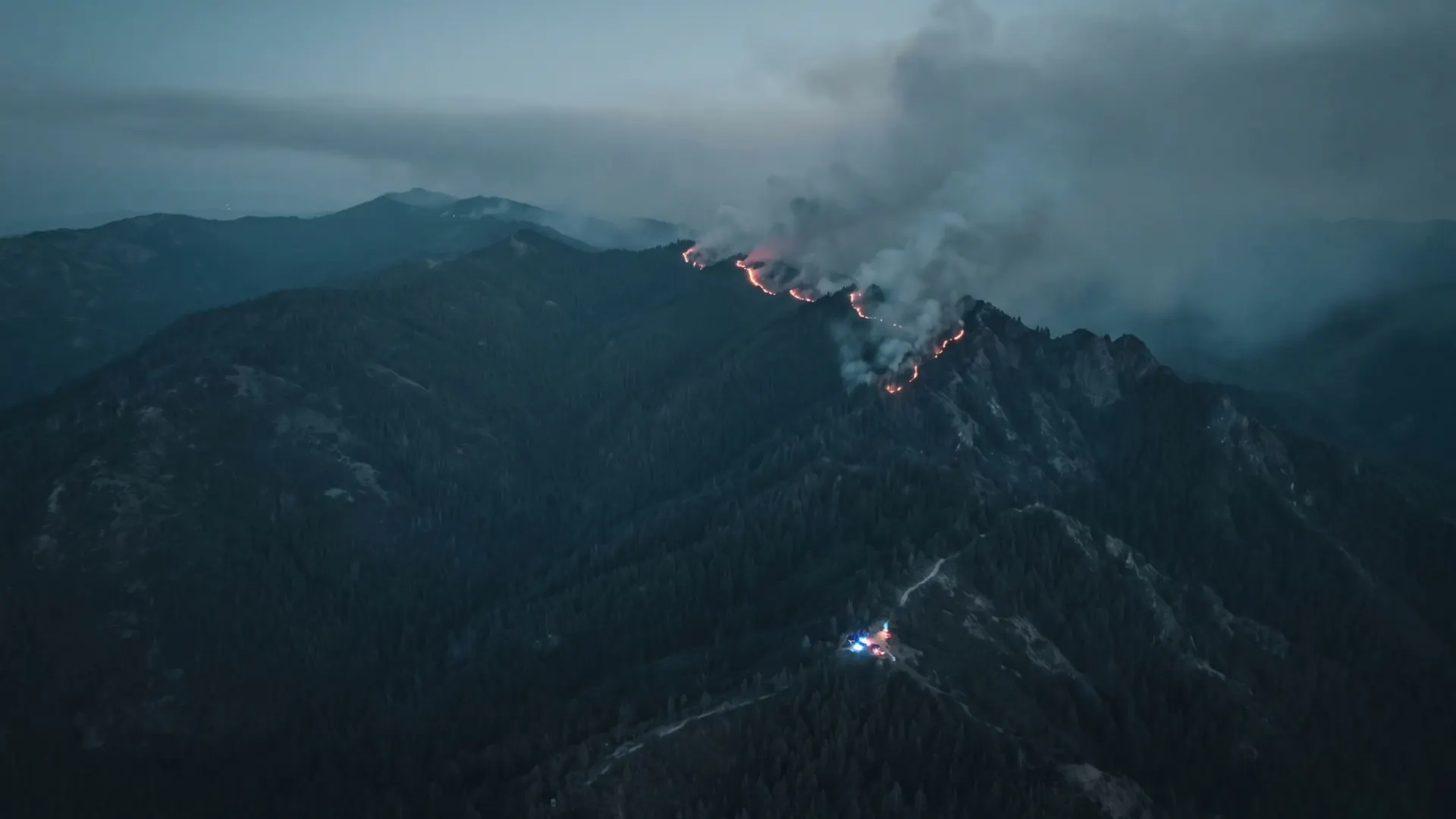
A fire line burning along a forested mountain ridge at night, with the lights of staged apparatus visible on a road below.

Fire & Emergency Services  //  Live

Every rig, every certification, every hour — accounted for.

Operion runs fire service operations end to end. The incident record officers complete becomes the NERIS submission, the asset history and the reimbursement file, without anyone entering it a second time.

What it covers

Incident logging is the entry point. Everything downstream reads from the same record.

The reimbursement case

This is the part that pays for itself, so it is worth being specific.

01

The facts exist during the response

Who was assigned, which apparatus ran and for how long, what was ordered, which sites were touched — all of it is known while the incident is running. It is only lost because nothing captures it at that moment.

02

Capture once, categorise as you go

Operion attributes labour, equipment hours and contracts as they are incurred, against the incident and the funding source at the same time. Category assignment happens against real sites rather than against a memory of them.

03

The package is assembled from the record

When the documentation is due, it is a view of what was already captured — not a reconstruction project competing with the next call for the same officer’s evening.

NERIS, not NFIRS. NERIS is the USFA data standard that succeeds NFIRS. Operion targets NERIS directly. Operion is an independent product of Elarchon Inc. and is not affiliated with, endorsed by or sponsored by FEMA, the USFA or the U.S. Department of Homeland Security.

Bring your last big incident.

Walk us through what it took to document it afterward, and we will show you what the same incident looks like when the record forms as it runs.

Request a demonstration